7th International Conference on Computing, Electronics & Communications Engineering
(iCCECE '25)
University of Bradford, UK |
 |
|
|
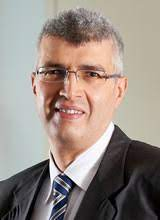
| Keynote Speaker-1: Professor Rami Qahwaji |
|
Professor Rami Qahwaji is a Professor of Visual Computing, with internationally recognised expertise in AI, computer vision, medical imaging and digital health, satellite and space imaging, and data visualisation. He has led high-impact research collaborations with NASA, ESA, NHS, and various SMEs. Notably, he led the development of an AI-based space weather prediction system, now integrated into NASA's Community Coordinated Modeling Center (CCMC). This system supports radiation management for missions such as the Chandra X-ray Observatory and was featured as a 100% internationally excellent (3*) impact case study in the Research Excellence Framework (REF) 2021. Professor Qahwaji also serves as the Unit of Assessment Coordinator for Computer Science and Informatics (B11) for both REF2021 and REF2029.
He has secured multi-million-pound research funding from UKRI, ESA, H2020, NHS, etc. He is the knowledge base lead and supervisor for the three-year KTP with Vision Surgery (June 2022 -- June 2025), which led to the launch of the startup CustomLensAI Ltd (https://customlens.ai/). His involvement in H2020 projects includes collaborations with SMEs such as SARAS Technology (UK), Acticom GmbH (Germany), and Iquadrat (Spain). He has led NHS-funded research into efficient 3D corneal modelling with partners including Weill Cornell Medical College, the University of Manchester, and Manchester Royal Infirmary-advancing AI-assisted medical diagnostics.
Professor Qahwaji was Academic Director of the Digital Catapult Centre Yorkshire (2015--2018) and led the Healthcare Technology Unit within the £13M Digital Health Enterprise Zone (DHEZ). He currently chairs the University's Computing Industry Advisory Board.
He holds PhD in AI and Visual Computing and is a Fellow of the IET, a Chartered Engineer (CEng), and a Fellow of the HEA. A founding member of the IET Healthcare Sector Executive Committee and IET technical assessor, he has published over 150 peer-reviewed papers, delivered numerous keynotes, and supervised more than 40 PhD students.
Title of Talk: Smarter Care: How AI is Transforming Healthcare and Disease Diagnosis
Synopsis of Talk: Artificial Intelligence (AI) and visual computing are transforming healthcare by enabling faster, more accurate disease diagnosis and customised treatment. This talk explores real-world applications of AI in areas such as ophthalmology, neurology, surgery, primary care, etc where complex and high-dimensional data are used to improve patient outcomes. We will present current research in digital health and diagnostics, highlighting collaborations with healthcare and industry partners. Key topics include automated medical imaging analysis, predictive modeling, remote diagnostics, and wearable technologies. The talk will also touch on challenges in data interpretation, knowledge representation, and the ethical and regulatory considerations of integrating AI into clinical practice.
|
|
|
|
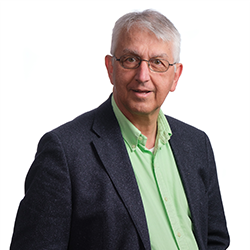
| Keynote Speaker-2: Professor Apostolos Vourdas |
|
Professor Apostolos Vourdas is a Professor of Computing at the University of Bradford.
His work is on fundamental and mathematical aspects of quantum computation.
After a PhD at the University of Manchester, he worked in UMIST, the University of Marburg (Germany) and the University of Liverpool, before he came to Bradford. He gives regularly invited talks in international conferences in his field. He has supervised many PhD students in areas related to quantum computation.
Title of the Keynote Speech: Quantum Computation
Abstract: This is an introductory talk on quantum computation, designed for non-experts who are interested in understanding this fascinating field. We will explore fundamental concepts such as superposition, which allows quantum bits, or qubits, to exist in multiple states simultaneously, opening up new possibilities for processing information. The idea of Schrödinger’s cat will be used to illustrate some of these counterintuitive phenomena. Additionally, we'll delve into entanglement, where particles become linked such that the state of one instantly influences the other, no matter the distance. The presentation will compare classical logic, based on Boolean algebra, with quantum logic, which operates under different principles. We will also discuss practical applications, particularly in the realm of quantum cryptography, which promises unprecedented security in communication. Overall, this talk aims to provide a clear overview of quantum computation’s potential and how it differs from classical computing.
|
|
| International Association for Educators and Researchers (IAER), registered in England and Wales - Reg #OC418009 Copyright IAER 2024 | |
|